Ouverture Suite TWV 55:Es3
"La Lyra"
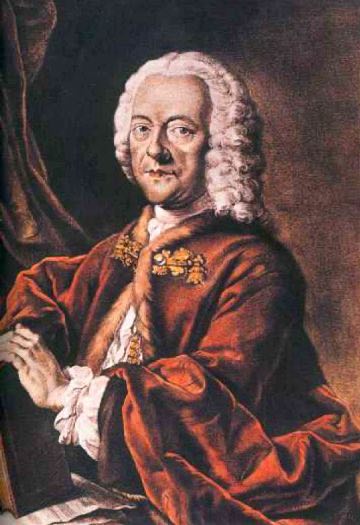
Probably one of the most prolific composers of all time, Georg Phillip Telemann wrote an enormous amount of wonderful music.
From a young age, he was actively composing, even though his family forbade it. He taught himself to play a wide range of instruments which may explain his excellent writing for so many of them.
A friend of both JS Bach and Handel, he was Capelmeister in Frankfurt and later Hamburg. He nearly took the Leipzig job which became JS Bachs major role because although offered the job in preference to Bach, , the authorities in Hamburg increased his pay to make sure he would not leave.
- Quintet
- Composer: GP Telemann
- Period: Baroque.
- Difficulty: Tricky
- Instruments:
- Descant/Sopranino
- Descant 2
- Treble
- Bass
- Contra
Notes
This is just one of Telemann’s more than 100 Ouverture Suites… so quite a prolific output! It is wonderful music to play and with the exception of the fugue in midst of the overture itself, really quite easy to play!
Thee original is in E♭, however this does not sit comfortably for recorders and means quite number of phrase have to be put up or down a octave which somewhat spoils his intentions, so this version has moved up a tone to F. Unlike many other versions, we have also put the movements in the order that Telemann used.
The contra part largely doubles the bass part.
This music is written in the French style and all movements have French spelt names, so are played inegale (unequal or dotted).
The piece is in 9 movements, however the 2 Bourrees and Menuets are, of course, intended to be played as one, so in both cases we have recorded them in pairs.
The ‘La Vielle’ movement is a little strange when you first hear it, but it grows on you and is a lot of fun to play. Apart from the top part, all the others only have one note… albeit played many times, but getting the ensemble together with the very fast tonguing is still a challenge and worth trying!
Music Copies
This is a bespoke arrangement exclusive to Consorts. It has been newly arrange from Telemann’s original manuscript which can be found on IMSLP.