
Menuet Antique
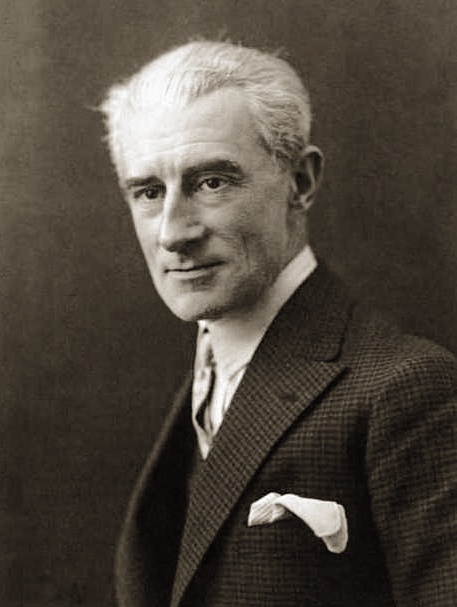
Born in 1875 in the French Basque Country, Maurice Ravel is one of the most significant French composers of the early 20th Century and with Claude Debussy, was responsible for the massive changes in compositional style which occurred at that time. He became one France’s best known and regarded composers, particularly in the 1920’s and 30’s.
Ravel was a prodigy and a highly talented pianist, but his original thinking did not sit well at the Paris Conservatiore and he left to make his own way as a composer and performer.Stravinsky called him a ‘Swiss Watch-Maker’ because of the precision of his work. His orchestration is always lucid and clear and his scores are precise. His piano works are ferociously difficult… highlighting his own abilities.
The Minuet Antique is an early work and was written in 1898 as a tribute to Chabrier and as thanks for his support to the young composer. At the time, he was to struggling to be heard, having not really fitted in at the highly conservative Paris Conservtiore. However, by the time he wrote the Minuet, he was studying with Gabriel Faure who recognised his talent and ability.
- Septet
- Composer: Maurice Ravel
- Period: 20th Century.
- Difficulty: Tricky
- Version :
- Sopranino
- Descant
- Treble
- Tenor 1
- Bass
- Great Bass
- Contra
Notes
Ravel’s music is never easy or simple and is beautifully and precisely constructed. The menuet is not a fast piece, so speed is not specifically an issue, however, there are plenty of accidentals to keep you on your toes as the tonality shifts around. Ravel also quite happy shifts the pitch around from low to higher textures so there are moments when the smaller instruments are not needed, but equally, there are other where instruments will be required to play sweetly, right at the top of the range.
Be prepared to across your legs too, ready for covering the bell of your instrument… Most parts have top C# or F#’s to play!